For many police departments, firearms evidence processing still depends too heavily on external bottlenecks.
When a department needs test-fired bullets recovered for comparison or investigative follow-up, the traditional path often means relying on a state crime lab or another outside facility. In some cases, that means shipping firearms, waiting in queue, and accepting delays that slow down the broader investigation.
That model creates friction.
It adds cost, reduces control, and can delay the speed at which detectives, firearms examiners, and investigators move from weapon recovery to actionable evidence.
That is one reason more agencies are beginning to look at a different approach.
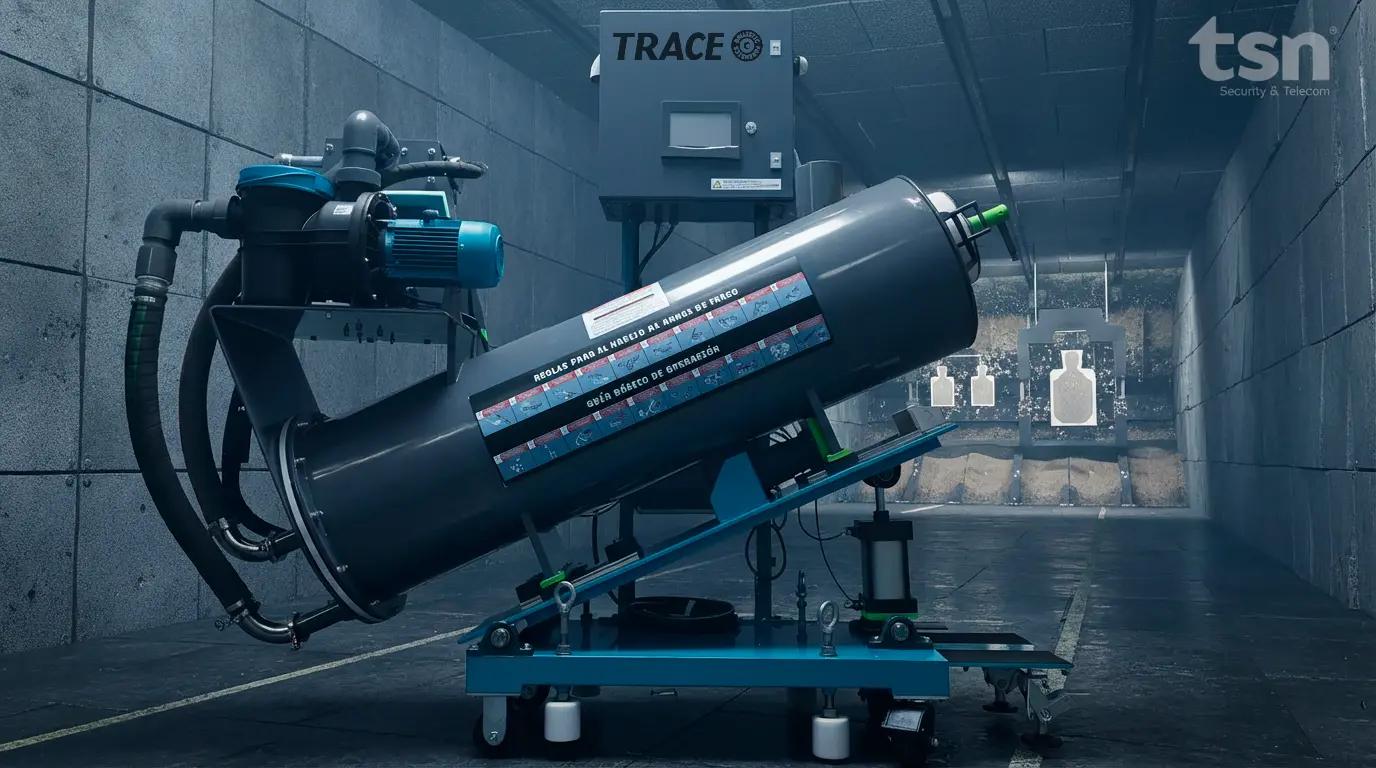
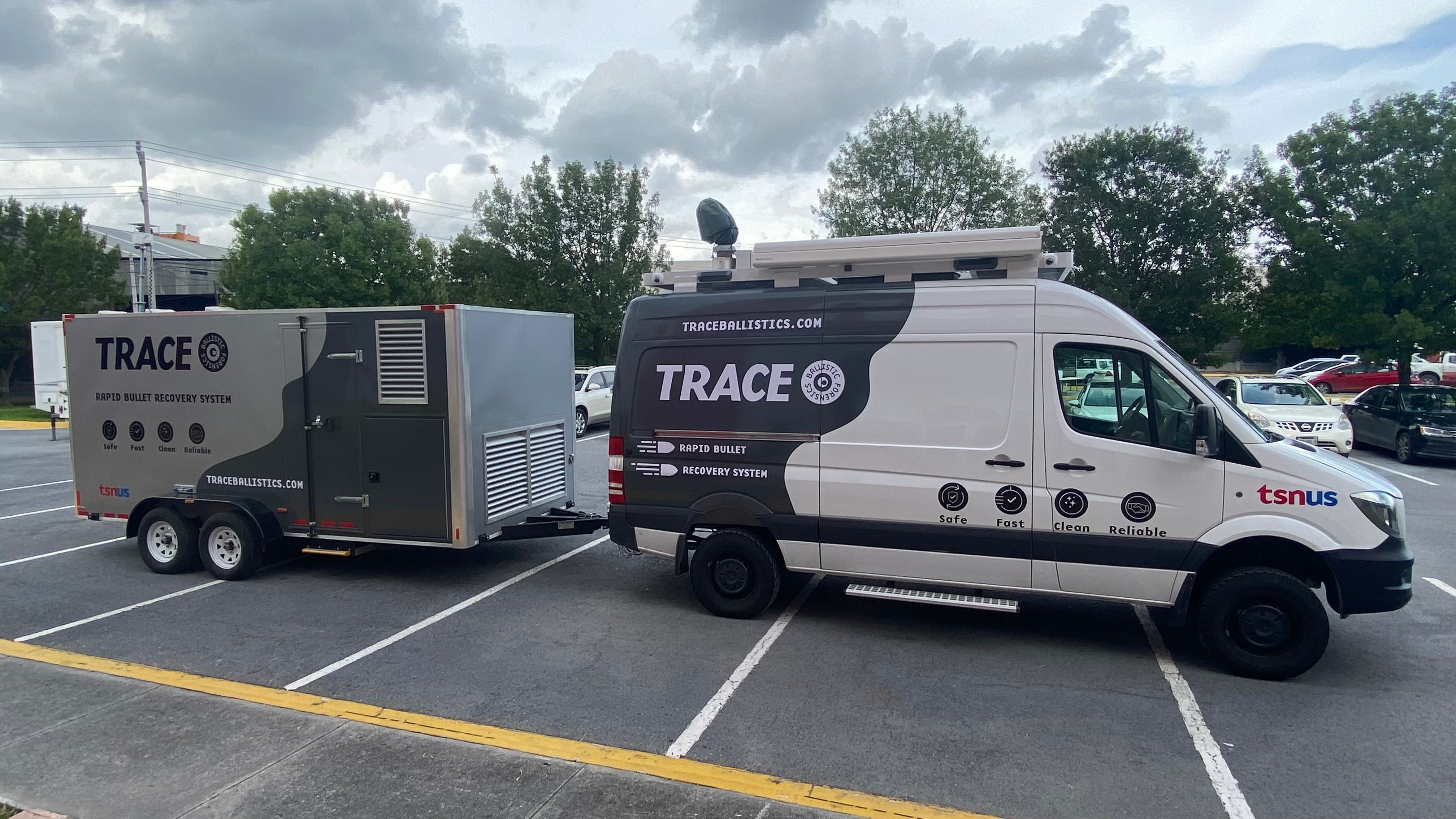
Police departments are choosing TRACE Ballistics because it helps bring a critical part of the firearms evidence workflow closer to the agency, making recovery faster, more controlled, and more practical for modern investigative operations.
The problem with relying entirely on outside labs
State crime labs play an important role, but they are not designed to eliminate every local delay for every department.
Many agencies face the same problem: when they need bullets recovered for firearms-related comparison work, they may have to send the firearm itself out for processing or depend on a third party to complete the recovery step.
That creates several issues.
First, it can be expensive. Shipping or transporting firearms, coordinating evidence submission, handling documentation, and waiting through external backlog all create direct and indirect cost.
Second, it consumes time. Even when the lab process itself is sound, the agency is still operating on someone else’s timeline.
Third, it reduces operational control. Once the firearm leaves the department’s hands for that part of the workflow, the department has less flexibility in how quickly it can move the case forward.
TRACE changes that equation.
Recovering bullets locally creates practical advantages
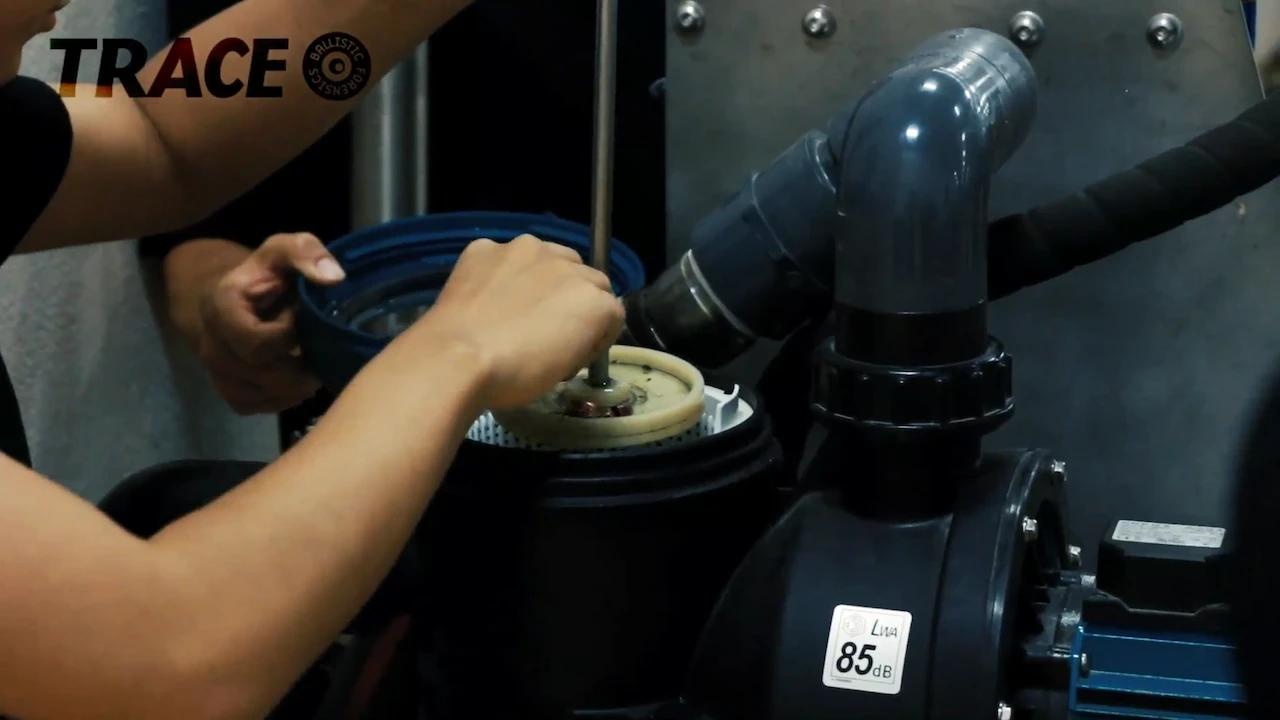
One of the clearest advantages of a bullet recovery system is that it allows an agency to recover bullets locally instead of defaulting to sending firearms out just to complete that step.
That matters because in many situations, sending bullets for comparison or further examination is simpler, lower-risk, and less burdensome than sending the firearm itself through a longer external process.
A department that can recover bullets in-house gains a more direct path from firearm possession to evidence generation.
That creates better operational tempo.
Instead of waiting for external recovery, the agency can move faster in preparing evidence for the next stage of analysis, comparison, or investigative coordination.
This is not just a convenience issue. It directly affects how quickly a case can progress.
Faster bullet recovery can help solve crimes sooner
Investigations lose momentum when evidence workflows stall.
When firearms-related cases depend on an outside recovery process, every additional delay slows investigative action. Detectives may be waiting for comparison support. Leads may cool. Follow-up decisions may be deferred. Internal momentum fades while the case sits in queue.
A department with local bullet recovery capability can reduce that delay.
That does not mean every step of forensic comparison disappears or that every agency replaces the role of larger forensic labs. It means the department can complete a key upstream step sooner and keep the case moving.
In practical terms, that can support:
- faster preparation of evidence,
- shorter waiting periods before the next forensic stage,
- quicker internal coordination between units,
- and better momentum on active cases.
In investigations, speed matters. Not for appearances, but because time affects outcomes.
TRACE gives agencies more control over their workflow
Police departments increasingly want more control over mission-critical processes.
That is true in communications, intelligence, mobile command, digital evidence, and firearms-related investigation. Agencies do not want every important step to sit behind an external bottleneck if there is a credible way to handle more of the workflow internally.
TRACE supports that shift.
By giving departments a practical way to recover bullets locally, TRACE helps agencies gain more control over how firearms evidence moves through the organization.
That control matters because it improves responsiveness. It reduces dependency. It lets the agency operate with greater confidence in how quickly it can act when a firearm-related case demands attention.
It can reduce unnecessary evidence movement
Every time evidence moves across organizations, additional burden is introduced.
There are logistics, documentation, packaging, transport considerations, scheduling, and administrative coordination. Even when all of that is handled correctly, it still consumes effort and time.
A local bullet recovery capability can reduce the need for unnecessary movement of firearms simply to complete the recovery stage.
That has practical value.
Less evidence movement can mean:
- less administrative friction,
- less transport burden,
- fewer handoff points,
- and a cleaner internal chain of handling before the next step in the process.
For departments trying to run tighter operations, this matters.
TRACE supports a more modern investigative posture
Modern police agencies are under pressure to do more with tighter resources and faster expectations.
They are expected to respond quickly, document thoroughly, coordinate effectively, and produce results in cases involving weapons, violence, and public safety risk.
That means infrastructure matters.
A bullet recovery system is not just a lab accessory. In the right environment, it becomes part of a more modern investigative posture, one where the agency is less dependent on delay-heavy external steps and more capable of moving critical evidence workflows forward internally.
Departments choosing TRACE are not just buying a machine. They are strengthening a capability.
It helps smaller or mid-sized agencies avoid unnecessary dependency
Not every department has a full in-house crime lab. Many agencies operate with limited forensic infrastructure and depend heavily on state-level resources.
That dependency makes sense in some areas, but it can also leave the department with fewer tools to move quickly on its own.
TRACE is attractive because it gives smaller or mid-sized agencies a practical way to bring one important function closer to home without having to build a full forensic laboratory from scratch.
That is a meaningful shift.
It gives departments a way to improve firearms evidence readiness without taking on the full burden of becoming something they are not.
It supports better use of internal personnel and time
When a department constantly relies on outside recovery steps, internal time gets wasted coordinating around delays.
Personnel spend time preparing submissions, tracking evidence movement, following up on external timelines, and waiting for a process they do not control.
A local bullet recovery system can make better use of internal personnel by reducing some of that delay-driven coordination burden and allowing the agency to complete a key evidence step with more immediacy.
This is not about replacing expertise. It is about removing unnecessary waiting where practical.
Why TRACE specifically
Police departments do not adopt a system like TRACE only because they want bullet recovery capability. They adopt it because they want that capability in a form that supports real-world operations.
The value of TRACE is not simply that it recovers bullets. It is that it helps agencies:
- recover bullets locally,
- reduce dependence on outside recovery steps,
- move investigations faster,
- maintain greater control over firearms evidence workflow,
- reduce administrative and logistical burden,
- and strengthen their operational readiness in firearm-related cases.
That is the real decision.
Departments are not just asking whether a system works. They are asking whether it helps them operate better.
TRACE answers that question more effectively than a workflow built around avoidable delay.
A faster path from firearm recovery to investigative action
When a firearm enters evidence, the clock matters.
The department wants to know what can be done next, how quickly evidence can move forward, and how soon investigative steps can be supported.
If the first answer is always “send it out and wait,” then the agency is accepting a slower path by default.
TRACE offers another path.
By enabling local bullet recovery, departments can create a faster transition from firearm possession to evidence preparation and case progression. That can make a real difference in how quickly investigative teams act and how effectively agencies respond to firearm-related incidents.
Conclusion
Police departments are choosing TRACE Ballistics because it helps solve a practical problem.
Relying entirely on outside recovery workflows can be expensive, slow, and operationally limiting. Sending firearms out when the real need is to recover bullets creates avoidable friction in the investigative process.
TRACE gives agencies a way to recover bullets locally, reduce delays, strengthen control over firearms evidence, and support faster case movement.
That is why more departments are adopting this capability.
Not because it sounds advanced, but because it helps them work faster, smarter, and with greater operational control when firearm-related investigations matter most.